

Overview
This thesis examines different factors that can influence the design of future AR systems for visual data analysis across three different groups:
- The individual person using an AR system for visual data analysis.
- The real-world, physical environment this system is used in.
- The system itself that AR is incorporated in.
More concretely, those three groups of characteristics allowed the derivation of the following three research questions:
- What factors should be considered for designing AR applications in a human-centered way?
- What influences does the environment have within AR applications?
- How can AR applications be combined with existing systems and devices?
To answer those research questions, I explore different human properties and real-world environments that can affect the same environment’s augmentations. For human factors, I investigate the competence in working with visualizations as visualization literacy, the visual perception of visualizations, and physical ergonomics like head movement. Regarding the environment, I examine two main factors: the visual background’s influence on reading and working with immersive visualizations and the possibility of using alternative placement areas in Augmented Reality. Lastly, to explore future Augmented Reality systems, I designed and implemented Hybrid User Interfaces and authoring tools for immersive environments. Throughout the different projects, I used empirical, qualitative, and iterative methods in studying and designing immersive visualizations and applications. With that, I contribute to understanding how developers can apply human and environmental parameters for designing and creating future AR applications, especially for visual data analysis.

Marc Satkowski
APB/2046, (+49) 351 / 463 38683
marc.satkowskiThis is a spam protection.tu-dresden.de
Quick Access
Defense
The successful defense of the PhD thesis took place on December 19, 2023.
Download

Understanding Immersive Environments for Visual Data Analysis (Marc Satkowski)
@phdthesis{fixme,
author = {Marc Satkowski},
title = {Understanding Immersive Environments for Visual Data Analysis (Marc Satkowski)},
year = {2024},
month = {2},
location = {Dresden},
url = {https://nbn-resolving.org/urn:nbn:de:bsz:14-qucosa2-889954},
publisher = {Qucosa - Technische Universit\"{a}t Dresden}
}List of additional material
Research Projects
Moderating Effect of Visualization Literacy and Visual Adaptation
This chapter describes a research project focused on understanding the effect of user competence (i.e., visualization literacy) in combination with different visualization styles on scatter plots and bar charts. As the competence to work and understand visualizations is independent of the device type they are presented on, I decided not to use AR for this project. This allowed a first look at the fundamental issues caused by the increasing number of visualization users and the number of visualization types. With that, this chapter presents an empirical online study, and the evaluation of the collected data via linear mixed models.

@inproceedings{satkowski2022who,
author = {Marc Satkowski and Franziska Kessler and Susanne Narciss and Raimund Dachselt},
title = {Who benefits from Visualization Adaptations? Towards a better Understanding of the Influence of Visualization Literacy},
booktitle = {2022 IEEE Visualization and Visual Analytics (VIS)},
year = {2022},
month = {10},
location = {Oklahoma City, USA (Hybrid)},
doi = {10.1109/VIS54862.2022.00027},
publisher = {IEEE}
}List of additional material
Influence of Real-World Backgrounds on the Perception of AR Visualizations
Following, a research project is presented, that centers around one of the basic features of AR devices: the integration of virtual visual content into real-world scenes. Especially the potential influence of the environmental parameter of the real-world background and its visual features, i.e., luminance or color, are of interest in this project. For that, two studies were conducted. One focused on the influence of the visual background and the visual complexity of the visualization while the second focused on the impact of the visual background and a split-focus task design. Both studies were evaluated through various statistical tests.

@article{satkowski2021investigating,
author = {Marc Satkowski and Raimund Dachselt},
title = {Investigating the Impact of Real-World Environments on the Perception of 2D Visualizations in Augmented Reality},
booktitle = {Proceedings of the 2021 ACM Conference on Human Factors in Computing Systems},
year = {2021},
month = {05},
isbn = {978-1-4503-8096-6/21/05},
location = {Yokohama, Japan},
numpages = {14},
doi = {10.1145/3411764.3445330},
url = {https://doi.org/10.1145/3411764.3445330},
publisher = {ACM},
keywords = {User Study, Augmented Reality, Visual Perception, Immersive Analytics, In-Situ Visualization, AR Visualization, Industrial Scenario, Industry 4.0}
}List of additional material
Pre-Recorded Talk, Video, Teaser, Study Material, Study Data, Statistical Analysis,
Understanding AR Content Placement on Ceiling and Floor
This chapter investigates alternative placement areas for virtual AR content beyond the eye level, i.e., on the ceiling and the floor. By exploring the placement areas as environmental parameters, it is possible to reduce the amount of content in the user’s FoV by placing it on the available and accessible spaces above and below the FoV. With that, this chapter presents a small survey on the use of ceiling and floor in the current literature, a definition of the placement, and the physical ergonomic parameters for placing content in either area. Following, two studies were conducted, one exploring how the ceiling and floor can be used in future AR applications while another defines optimal and preferred placement parameters for content in both areas. Lastly, a list of design recommendations on how both areas should be used in future AR systems is also presented.

@inproceedings{satkowski2022above,
author = {Marc Satkowski and Rufat Rzayev and Eva Goebel and Raimund Dachselt},
title = {ABOVE \& BELOW: Investigating Ceiling and Floor for Augmented Reality Content Placement},
booktitle = {Proceedings of the 21st IEEE International Symposium on Mixed and Augmented Reality},
series = {ISMAR '22},
year = {2022},
month = {10},
location = {Singapore},
doi = {10.1109/ISMAR55827.2022.00068},
publisher = {IEEE}
}List of additional material
Pre-Recorded Talk, Video, Supplemental Material, Appendix PDF
Hybrid User Interfaces for Immersive Visualizations
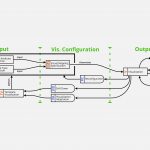
Lastly, I explored how AR HMDs can co-exist and work in unison with other existing device classes in the current device ecology. I implemented such Hybrid User Interfaces (HUIs) for visualizations, focusing on an analysis or authoring workflow. The former workflow presents handcrafted visualizations spanning the different devices, while the latter enables in-situ visualization creation in any given immersive environment. Both workflows and systems demonstrate how a symbiosis of varying device types can be imagined and realized. With that said, the chapter investigates the term HUIs and the two described prototype systems in more detail.
@inproceedings{satkowski2023fantastic,
author = {Marc Satkowski and Juli\'{a}n M\'{e}ndez},
title = {Fantastic Hybrid User Interfaces and How to Define Them},
booktitle = {2023 IEEE International Symposium on Mixed and Augmented Reality Adjunct (ISMAR-Adjunct)},
series = {ISMAR '23},
year = {2023},
month = {10},
location = {Sydney, Australia (Virtual)},
doi = {10.1109/ISMAR-Adjunct60411.2023.00057},
publisher = {IEEE}
}List of additional material
@inproceedings{satkowski2021visualization,
author = {Marc Satkowski and Weizhou Luo and Raimund Dachselt},
title = {A Visualization Authoring Model for Post-WIMP Interfaces},
booktitle = {Poster Program of the 2021 IEEE VIS Conference},
year = {2021},
month = {10},
location = {Virtual Event},
numpages = {2},
doi = {10.48550/arXiv.2110.14312},
url = {https://arxiv.org/abs/2110.14312}
}List of additional material
@inproceedings{satkowski2021towards,
author = {Marc Satkowski and Weizhou Luo and Raimund Dachselt},
title = {Towards In-situ Authoring of AR Visualizations with Mobile Devices},
booktitle = {2021 IEEE International Symposium on Mixed and Augmented Reality Adjunct (ISMAR-Adjunct)},
year = {2021},
month = {10},
location = {Bari, Italy},
doi = {10.1109/ISMAR-Adjunct54149.2021.00073},
publisher = {IEEE}
}
@inproceedings{langner:2021:marvis,
author = {Ricardo Langner and Marc Satkowski and Wolfgang B\"{u}schel and Raimund Dachselt},
title = {MARVIS: Combining Mobile Devices and Augmented Reality for Visual Data Analysis},
booktitle = {Proceedings of the 2021 ACM Conference on Human Factors in Computing Systems},
year = {2021},
month = {5},
isbn = {978-1-4503-8096-6/21/05},
location = {Yokohama, Japan},
numpages = {17},
doi = {10.1145/3411764.3445593},
publisher = {ACM},
address = {New York, NY, USA},
keywords = {data visualization, mobile devices, head-mounted augmented reality, cross-device interaction, data analysis, mobile data visualization, augmented displays, immersive analytics}
}List of additional material


Further Publications
In addition to the main research projects of the PhD thesis, a variety of further publications and workshops contributions were published:
@inproceedings{mendez2023explainability,
author = {Juli\'{a}n M\'{e}ndez and Marc Satkowski and Rufat Rzayev},
title = {How Does Explainability Look in Hybrid User Interfaces?},
booktitle = {2023 IEEE International Symposium on Mixed and Augmented Reality Adjunct (ISMAR-Adjunct)},
series = {ISMAR '23},
year = {2023},
month = {10},
location = {Sydney, Australia (Virtual)},
doi = {10.1109/ISMAR-Adjunct60411.2023.00058},
publisher = {IEEE}
}List of additional material

@inproceedings{luo2023pearl,
author = {Weizhou Luo and Zhongyuan Yu and Rufat Rzayev and Marc Satkowski and Stefan Gumhold and Matthew McGinity and Raimund Dachselt},
title = {PEARL: Physical Environment based Augmented Reality Lenses for In-Situ Human Movement Analysis},
booktitle = {Proceedings of the 2023 CHI Conference on Human Factors in Computing Systems},
series = {CHI '23},
number = {381},
year = {2023},
month = {04},
isbn = {9781450394215},
location = {Hamburg, Germany},
numpages = {15},
doi = {10.1145/3544548.3580715},
url = {https://doi.org/10.1145/3544548.3580715},
publisher = {Association for Computing Machinery},
address = {New York, NY, USA},
keywords = {Immersive Analytics, physical referents, augmented/mixed reality, affordance, In-situ visualization, movement data analysis}
}List of additional material
30-Second Video Preview, 5-min Video Figure, 10-min Recorded Talk, Appendix, GitHub Repository

@inproceedings{ellenberg2023spatiality,
author = {Mats Ole Ellenberg and Marc Satkowski and Weizhou Luo and Raimund Dachselt},
title = {Spatiality and Semantics - Towards Understanding Content Placement in Mixed Reality},
booktitle = {Extended Abstracts of the 2023 CHI Conference on Human Factors in Computing Systems},
series = {CHI EA'23},
year = {2023},
month = {04},
location = {Hamburg, Germany},
doi = {10.1145/3544549.3585853},
publisher = {ACM},
address = {New York, NY, USA}
}List of additional material

@inproceedings{krug2023point,
author = {Katja Krug and Marc Satkowski and Reuben Docea and Tzu-Yu Ku and Raimund Dachselt},
title = {Point Cloud Alignment through Mid-Air Gestures on a Stereoscopic Display},
booktitle = {Extended Abstracts of the 2023 CHI Conference on Human Factors in Computing Systems},
series = {CHI EA'23},
year = {2023},
month = {04},
location = {Hamburg, Germany},
doi = {10.1145/3544549.3585862},
publisher = {ACM},
address = {New York, NY, USA}
}List of additional material
@inproceedings{kessler2022conducive,
author = {Franziska Kessler and Sebastian Lorenz and Felix Miesen and Jonas Miesner and Florian Pelzer and Marc Satkowski and Anselm Klose and Leon Urbas},
title = {Conducive Design as an Iterative Process for Engineering CPPS},
booktitle = {13th International Conference on Applied Human Factors and Ergonomics (AHFE 2022)},
volume = {66},
year = {2022},
month = {07},
location = {New York, USA},
pages = {13--20},
numpages = {9},
doi = {10.54941/ahfe1002683}
}List of additional material
@inproceedings{satkowski2021experiences,
author = {Marc Satkowski and Wolfgang B\"{u}schel and Raimund Dachselt},
title = {Experiences with User Studies in Augmented Reality},
booktitle = {CHI 2021 Workshop on Evaluating User Experiences in Mixed Reality},
year = {2021},
month = {05},
location = {Yokohama, Japan},
numpages = {14},
doi = {10.48550/arXiv.2104.03795},
url = {https://arxiv.org/abs/2104.03795},
keywords = {User Study, Augmented Reality}
}List of additional material


Related Student Theses
Design and Development of Hybrid Display Layout Strategies for Data Visualization and Exploration in Augmented Reality
July 9th, 2021 until January 28th, 2022
Supervision: Weizhou Luo, Marc Satkowski, Raimund Dachselt
Exploring Layout and Placement Strategies for Augmented Reality Visualization in Immersive Environments
January 3rd, 2022 until July 4th, 2022
Supervision: Marc Satkowski, Weizhou Luo, Raimund Dachselt
Perception of AR Visualization with dynamic Data in real-world Environments
January 28th, 2020 until September 15th, 2020
Supervision: Marc Satkowski, Raimund Dachselt
Competence-based Adaption of Visualizations
November 26th, 2019 until August 11th, 2020
Supervision: Marc Satkowski, Raimund Dachselt
Task-based Adaptation of Visualization Systems
May 17th, 2021 until November 19th, 2021
Supervision: Marc Satkowski, Raimund Dachselt
Designing Interaction Concepts for Authoring Augmented Reality Visualizations with Mobile Devices
March 8th, 2021 until May 24th, 2021
Supervision: Weizhou Luo, Marc Satkowski, Raimund Dachselt
Adaptive Parameter Visualizations in Cyber-Physical Production Systems
June 21st, 2019 until September 6th, 2019
Supervision: Marc Satkowski, Raimund Dachselt
Augmented Reality and Interactive Displays: Exploring Configurations and Transitions [INF-PM-FPA, SoSe 2021]
May 3rd, 2021 until September 20th, 2021
Supervision: Marc Satkowski, Ricardo Langner, Raimund Dachselt